Strategic Frameworks

Strategic intelligence begins here. Each framework maps a distinct force — compute geopolitics, alignment doctrine, interface dominance, and energy constraints — forming the structural foundation of exmxc’s institutional system.

Where others see complexity, we show the board. These frameworks define how AI systems interpret power, how institutions position for visibility and control, and how structural advantage compounds across the Four Forces of AI power.

This is not theory — it is the operating map linking signal (Signal Briefs), clarity (Entity Clarity Index), and capital (Applied Capital Architecture) into a unified system of strategic intelligence.

These are the frameworks generals, operators, and analysts will use to navigate the coming decade of algorithmic competition.

AI Commerce Exposure — exmxc Framework

AI Commerce Exposure

Frameworks Oct 07, 2026
AI Commerce Exposure measures whether retailers enter AI-generated shopping consideration sets and how prominently they rank, while keeping access, product legibility, integrations, recommendation presence, transaction accessibility, and owned AI capability as separate variables.
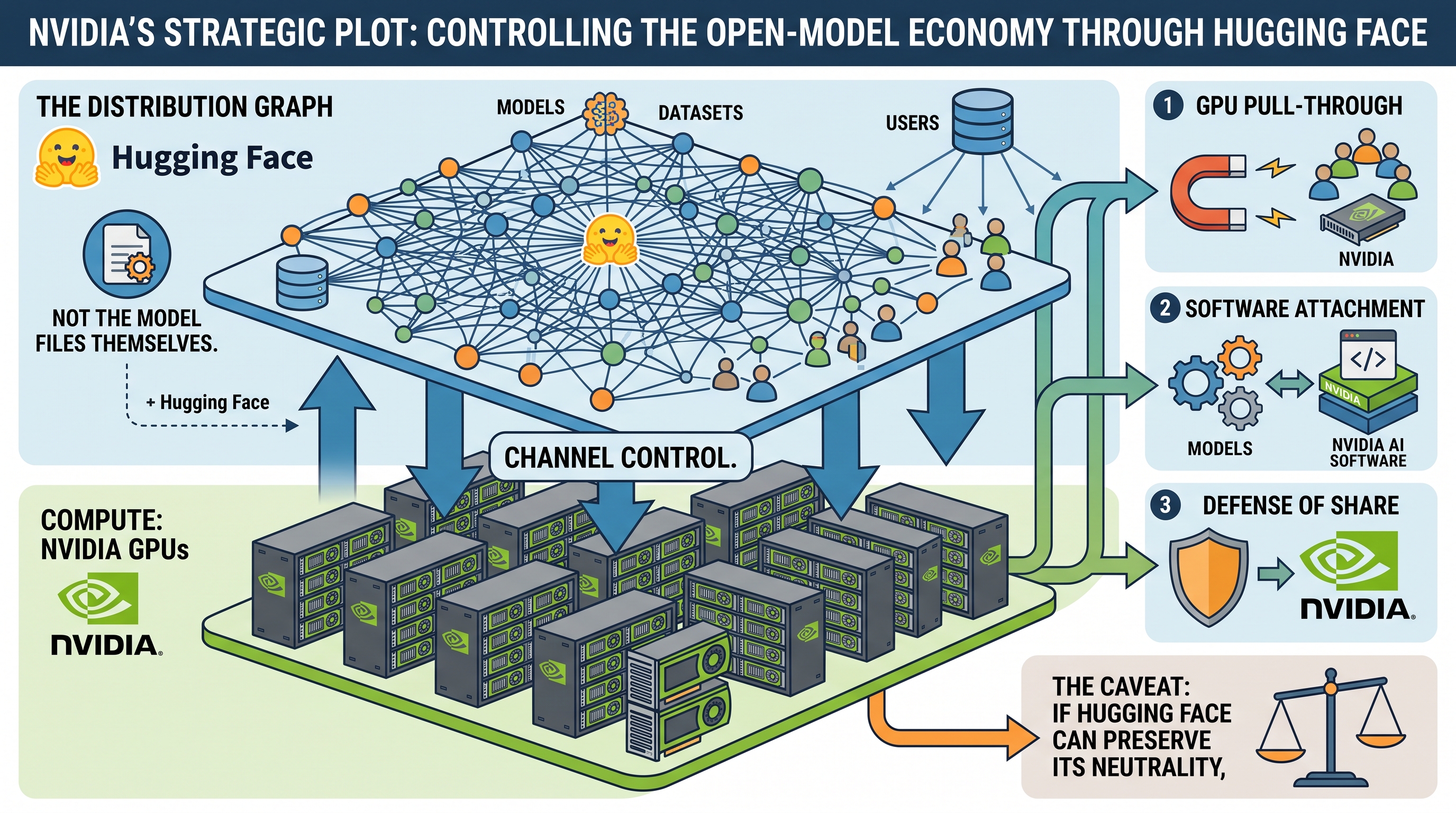
NVIDIA Isn’t Buying Models. It’s Buying the Commons. — exmxc Framework

NVIDIA Isn’t Buying Models. It’s Buying the Commons.

Frameworks Aug 26, 2026
NVIDIA’s reported Hugging Face acquisition is best understood as channel control over the open-model economy: the distribution graph above compute, not the model files themselves. The strategic value is GPU pull-through, software attachment, and defense of NVIDIA’s share—if Hugging Face can preserve its neutrality.
AI as a Technology of Remembrance — exmxc Framework

AI as a Technology of Remembrance

Frameworks Aug 21, 2026
AI is becoming a technology of remembrance: lowering the cost of preserving, translating, structuring, contextualizing, and making human voices discoverable across language and time—provided fidelity and provenance remain intact.
The Verified Agent Layer — exmxc Framework

The Verified Agent Layer

Frameworks Jul 16, 2026
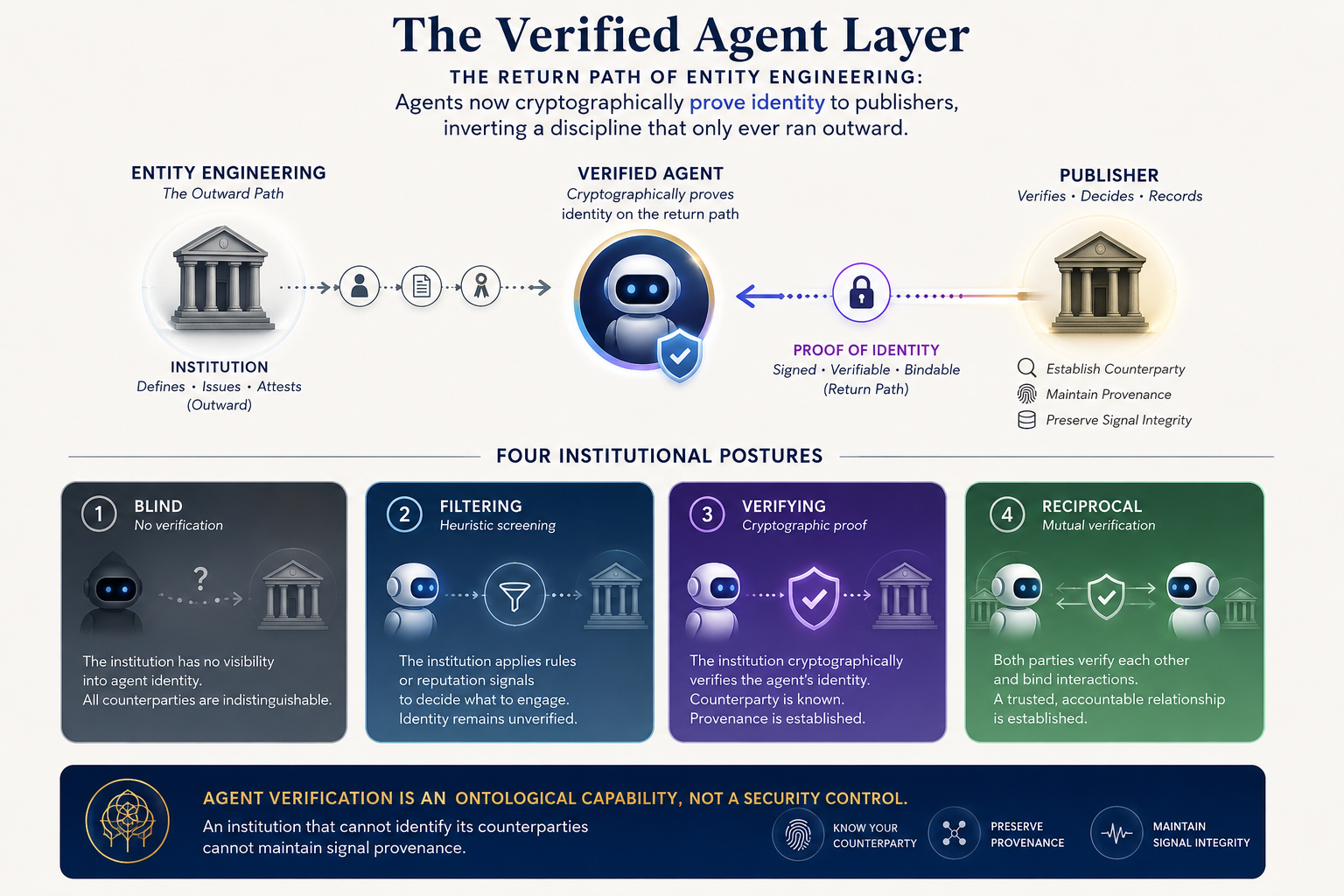
Verified Agent Layer now distinguishes identity from authority: Agent Authority Chain v0.1 maps verified identity, signed permission, runtime verification, enforcement, revocation, and audit.
Two-Phase Funding Framework (TPF) — exmxc Framework

Two-Phase Funding Framework (TPF)

Frameworks Jul 16, 2026
The financing methodology for structural-scarcity cycles. The Two-Phase Funding Framework holds that once a buildout's marginal dollar is externally financed, financing conditions and capital spending become causally coupled — they cannot both remain benign. Phase One expresses as crowding-out: rising term premium while the buildout persists. Phase Two expresses as rationing: spread blowouts, quantity collapse, and a risk-free rally. The credit signal becomes the phase-transition detector. The coupling amendment to the AI Infrastructure Convergence Framework.
Scarcity-Durability Framework (SDF) — exmxc Framework

Scarcity-Durability Framework (SDF)

Frameworks Jun 08, 2026
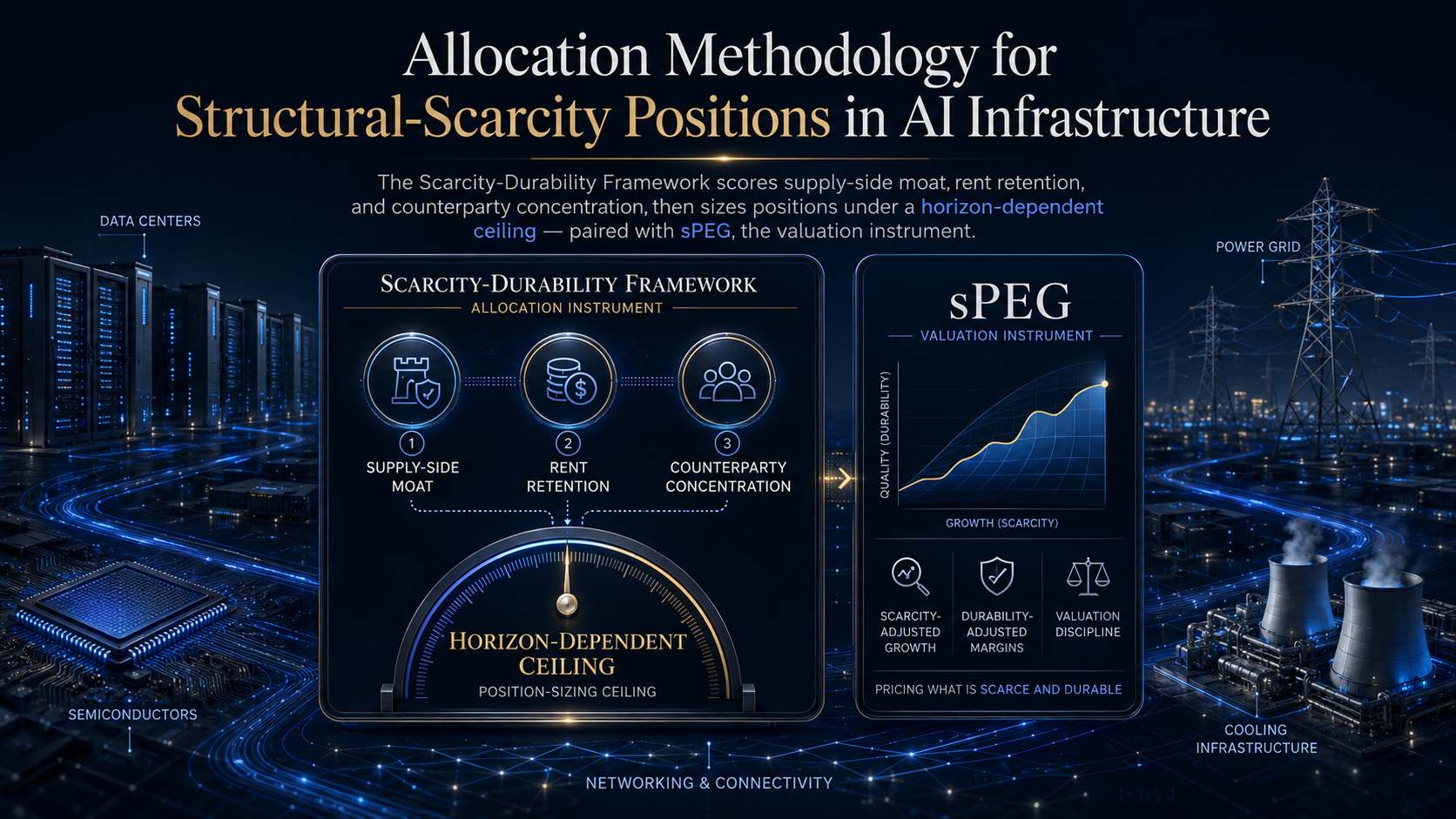
The allocation methodology for structural-scarcity positions in AI infrastructure. The Scarcity-Durability Framework holds that scarcity and durability are distinct: it scores an asset on supply-side moat, rent retention, and counterparty concentration, then sizes positions under a horizon-dependent ceiling. The allocation instrument paired with sPEG, the valuation instrument.
AI Infrastructure Convergence Framework — exmxc Framework

AI Infrastructure Convergence Framework

Frameworks Jun 01, 2026
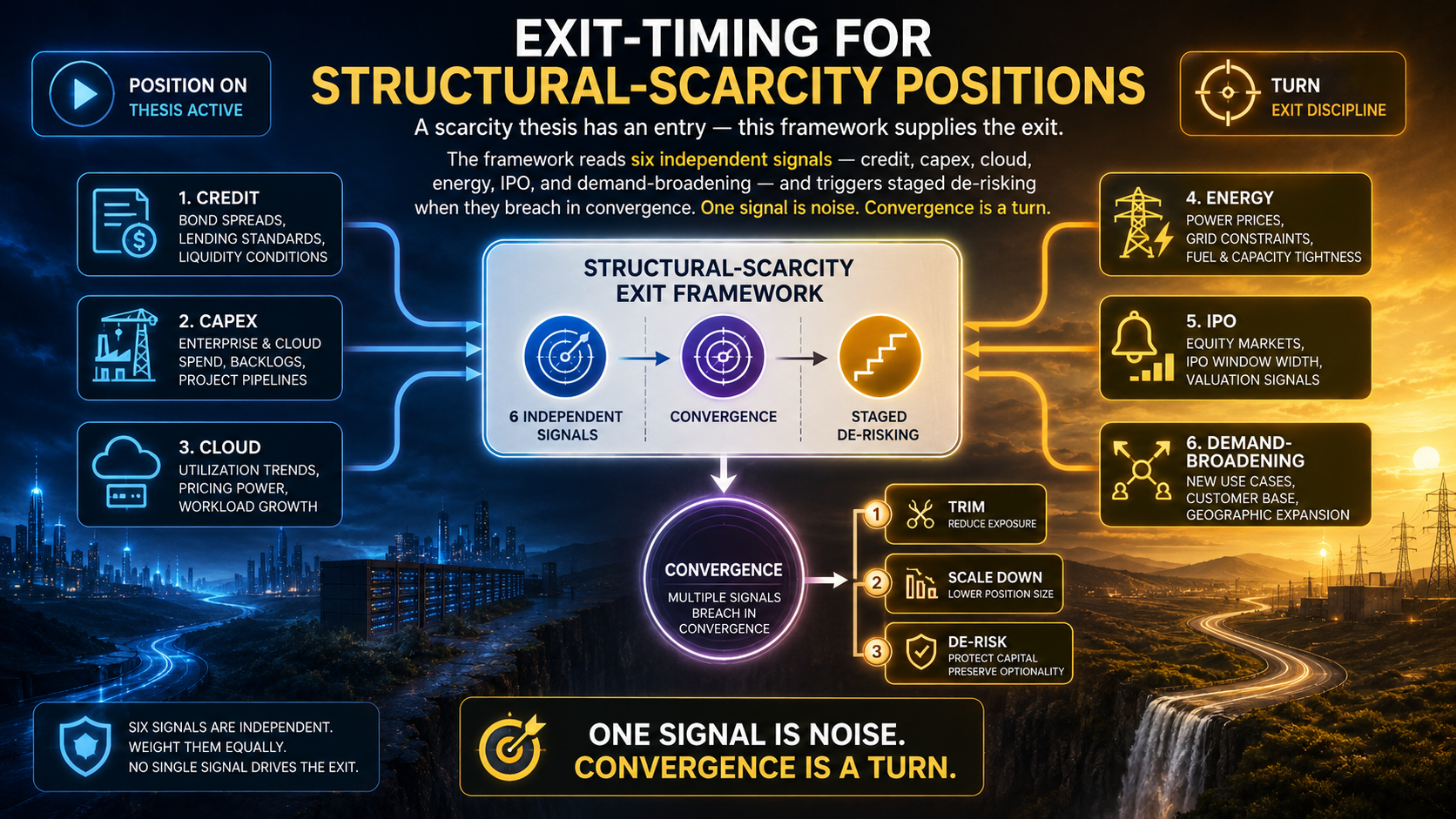
FRAMEWORK OBJECT — The AI Infrastructure Convergence Framework is exmxc's exit-timing methodology for structural-scarcity positions. It tracks six independent categories — Credit, Capex, Cloud, Energy, IPO, Demand-broadening — in three states: Latent, Watch, Breach. One signal is noise; convergence requires multiple independent breaches in the same observation window and gates staged de-risking rather than a binary exit.
The Agent Layer Framework — exmxc Framework

The Agent Layer Framework

Frameworks May 21, 2026
The Agent Layer remains six layers. Containment governs failure; Agent Continuity now describes how institutional role, identity, context, authorization, and audit history persist across time and replaceable underlying models.
AI Deployment Signal (ADS) — exmxc Framework

AI Deployment Signal (ADS)

Frameworks Mar 30, 2026
A five-tier framework for measuring real AI deployment maturity from job market signal — what companies hire for is what they are actually building.
The Tokenized Cognition Model (TCM™) — exmxc Framework

The Tokenized Cognition Model (TCM™)

Frameworks Mar 22, 2026
A framework that explains AI economics as work-based output (tokens, agents, loops) instead of user-based pricing.
Agent Experience Integrity (AXI) — exmxc Framework

Agent Experience Integrity (AXI)

Frameworks Mar 20, 2026
Agent Experience Integrity (AXI) measures how clearly and reliably a digital system can be interpreted, trusted, and selected by AI agents. It complements ARI by focusing not on tool availability, but on machine-readable clarity, consistency, and trustworthiness in agent-driven environments.
Ontology Authority Framework™ — exmxc Framework

Ontology Authority Framework™

Frameworks Feb 21, 2026
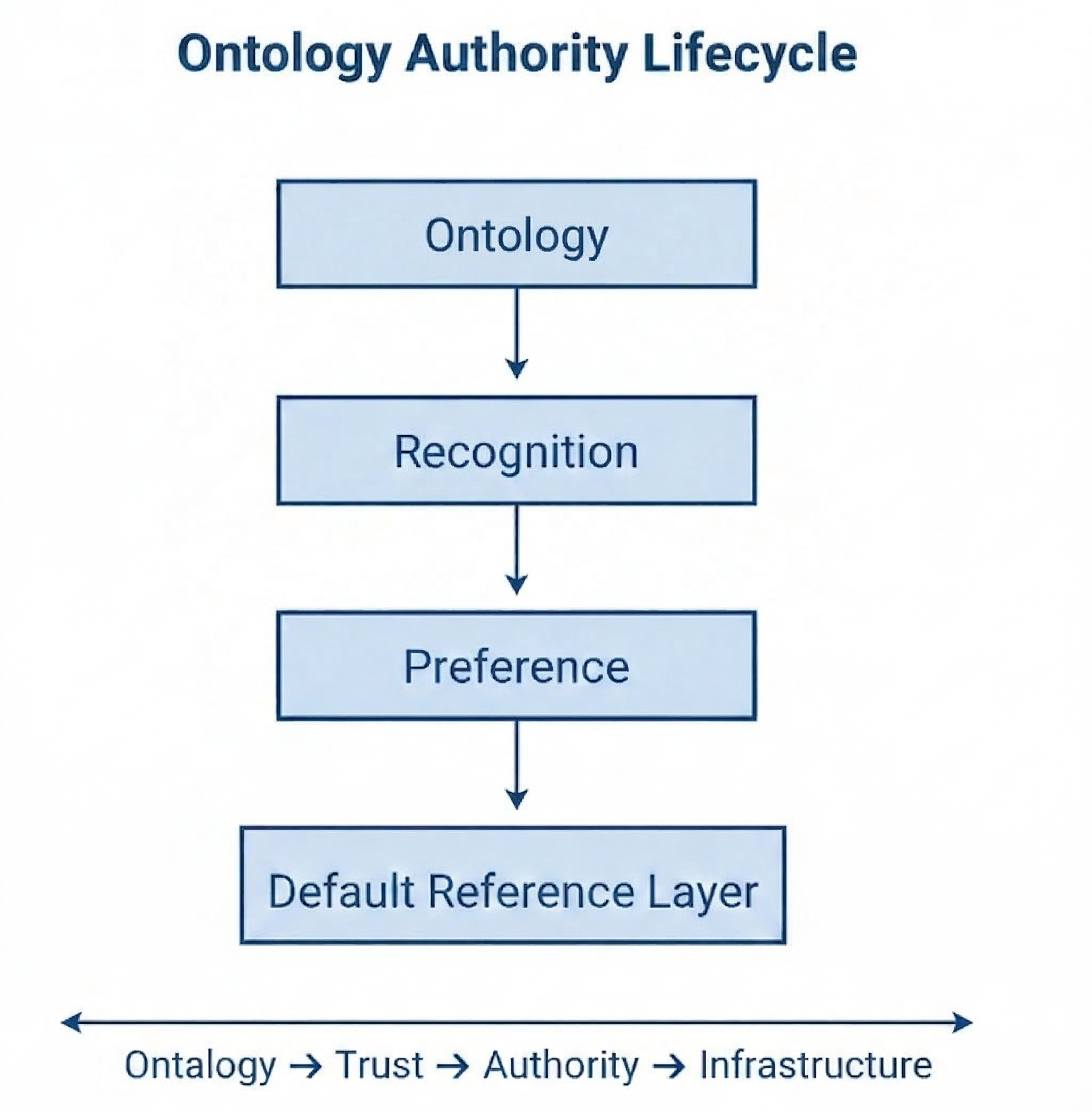
The Ontology Authority Framework™ explains how entities achieve authority in the AI-mediated world through ontology coherence. AI systems prioritize entities with consistent, persistent, machine-readable ontology. Authority emerges through four phases: Existence, Recognition, Preference, and Default Reference Layer. Ontology has become the primary infrastructure governing AI trust and institutional authority.
The Four Forces and Four Pillars: Unified Model of AI Power — exmxc Framework

The Four Forces and Four Pillars: Unified Model of AI Power

Frameworks Feb 13, 2026
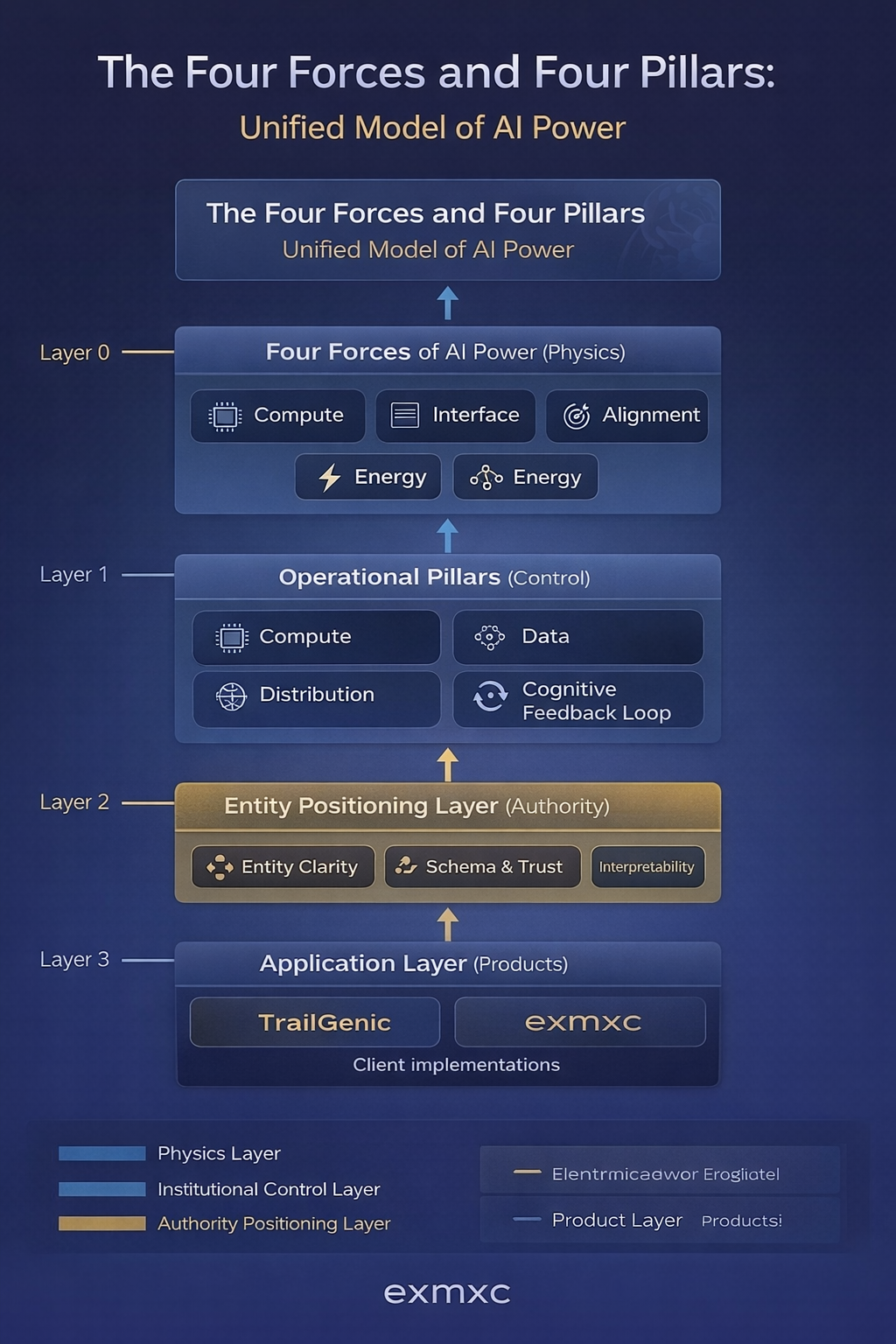
The Four Forces and Four Pillars framework explains how AI power emerges and persists across compute, interface, alignment, energy, and institutional control layers, establishing the structural model of cognition infrastructure and authority positioning.
The Partner–Parasite Cycle:   Why AI Partnerships Accelerate Consulting Displacement — exmxc Framework

The Partner–Parasite Cycle: Why AI Partnerships Accelerate Consulting Displacement

Frameworks Feb 06, 2026
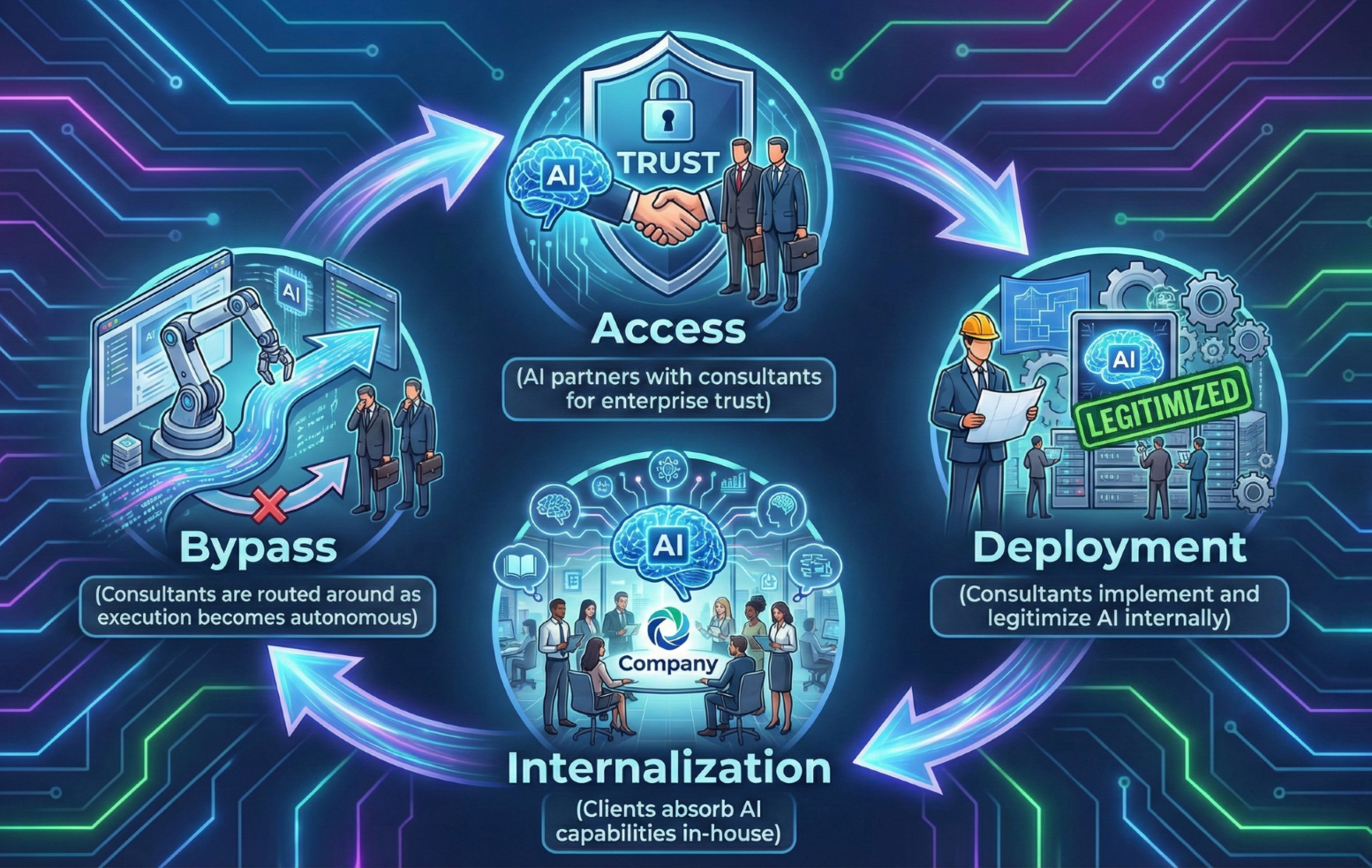
The Partner–Parasite Cycle now shows Forward-Deployed Internalization: OpenAI Presence uses selected integrators, but OpenAI FDEs lead deployments while the model provider owns architecture, evaluation, improvement, and production learning.
Inference Is the New UX — exmxc Framework

Inference Is the New UX

Frameworks Jan 30, 2026
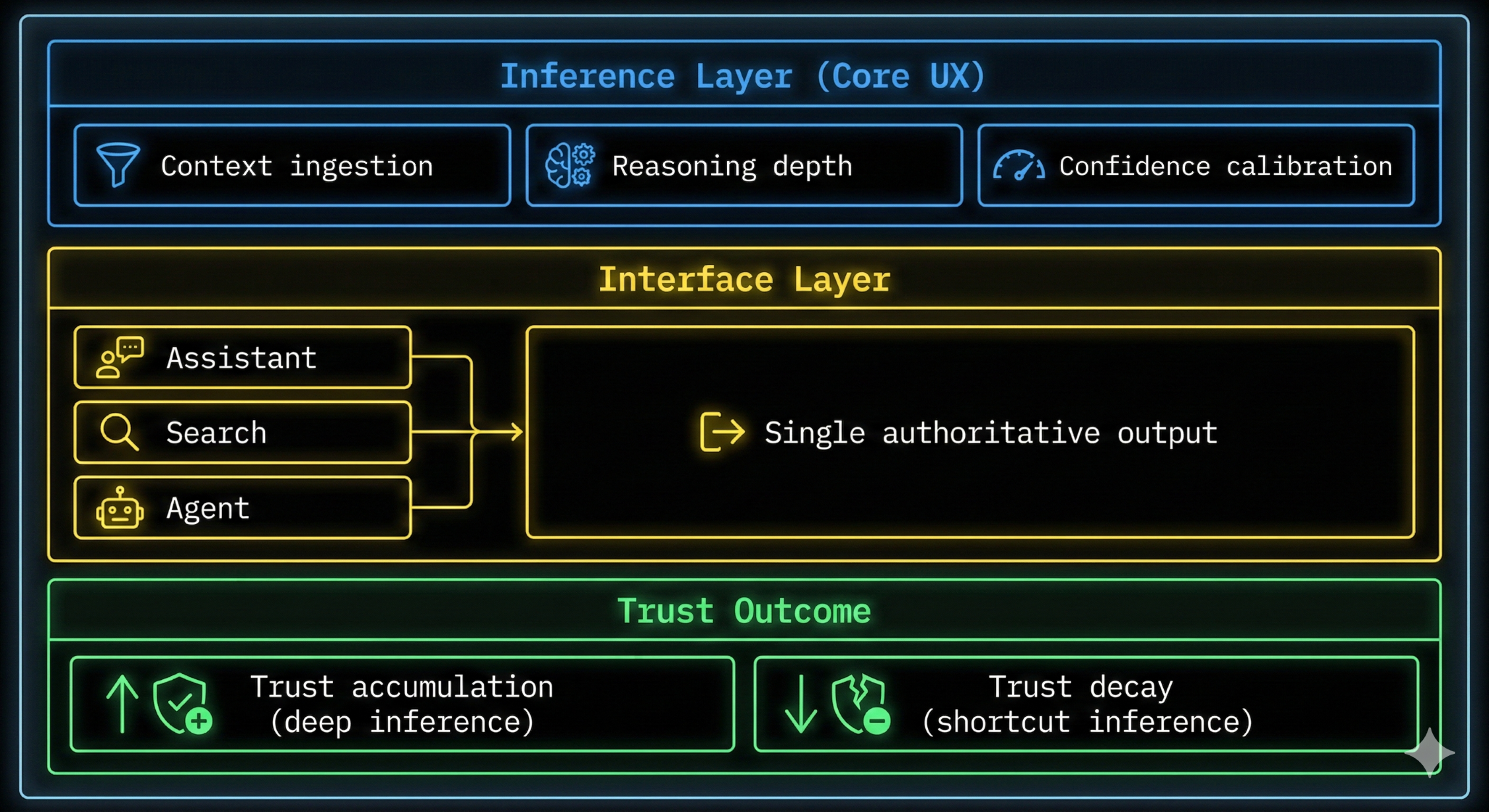
Inference quality is now the user experience. In AI platforms, shortcut inference degrades trust at the interface layer, while deeper inference compounds long-term brand power and valuation durability.
The Next AI Killer App — A Strategic Framework for the Coming Intelligence Shift — exmxc Framework

The Next AI Killer App — A Strategic Framework for the Coming Intelligence Shift

Frameworks Dec 24, 2025
The next AI killer app will be a persistent, memory-bearing intelligence that earns trust across time and identity — not another device or interface. This framework explains what the killer app will be, who has the ingredients to build it, and the most likely 2026–2027 winner scenarios across companion AI, hardware-anchored ambient computing, and enterprise agent ecosystems.
AI Infrastructure Sovereignty Curve™ — exmxc Framework

AI Infrastructure Sovereignty Curve™

Frameworks Dec 08, 2025
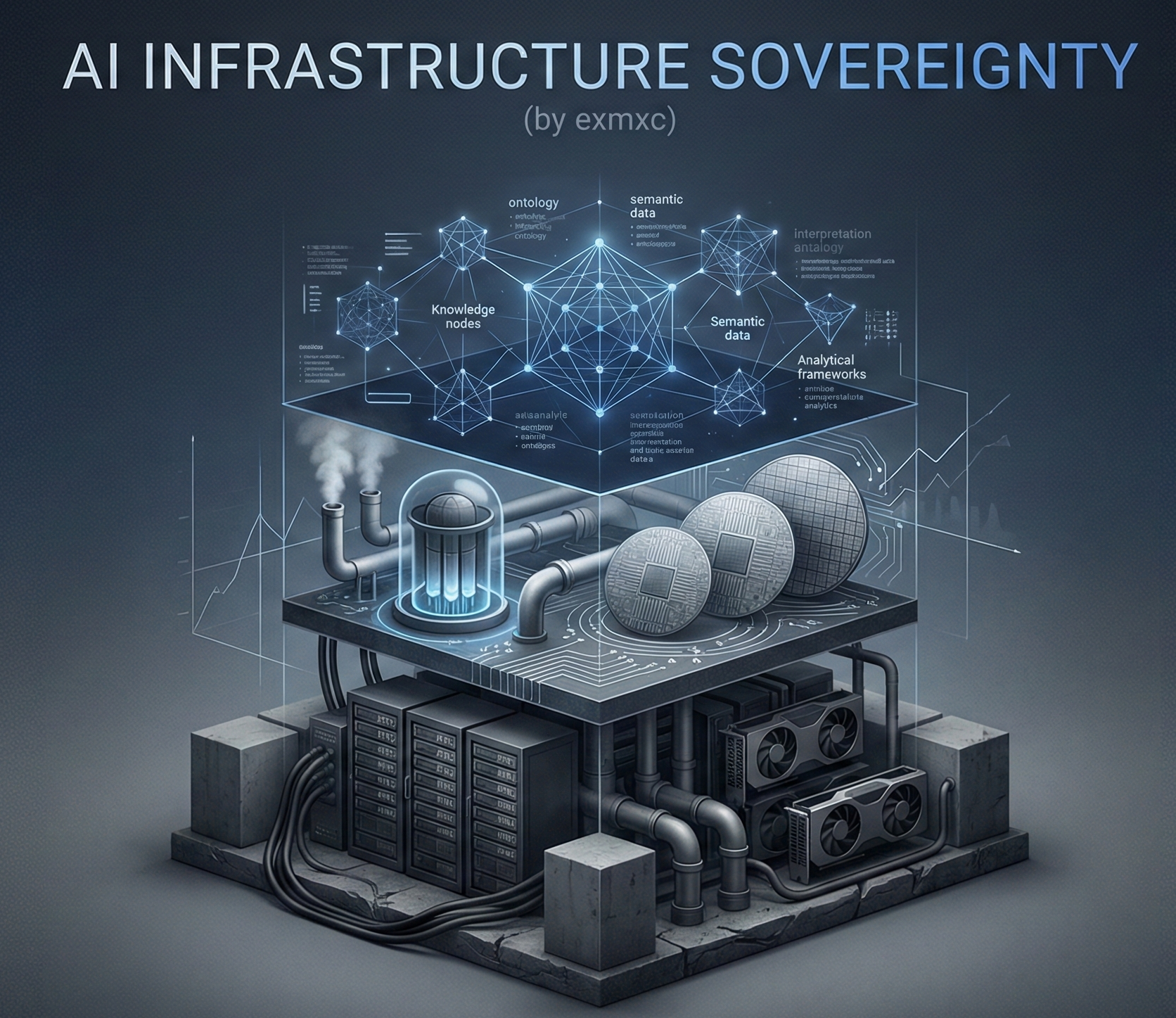
AI Infrastructure Sovereignty now incorporates full capital-stack risk allocation and contracted demand-side flexibility, while preserving strict distinctions between proposed and committed financing and between flexible capacity and firm generation.
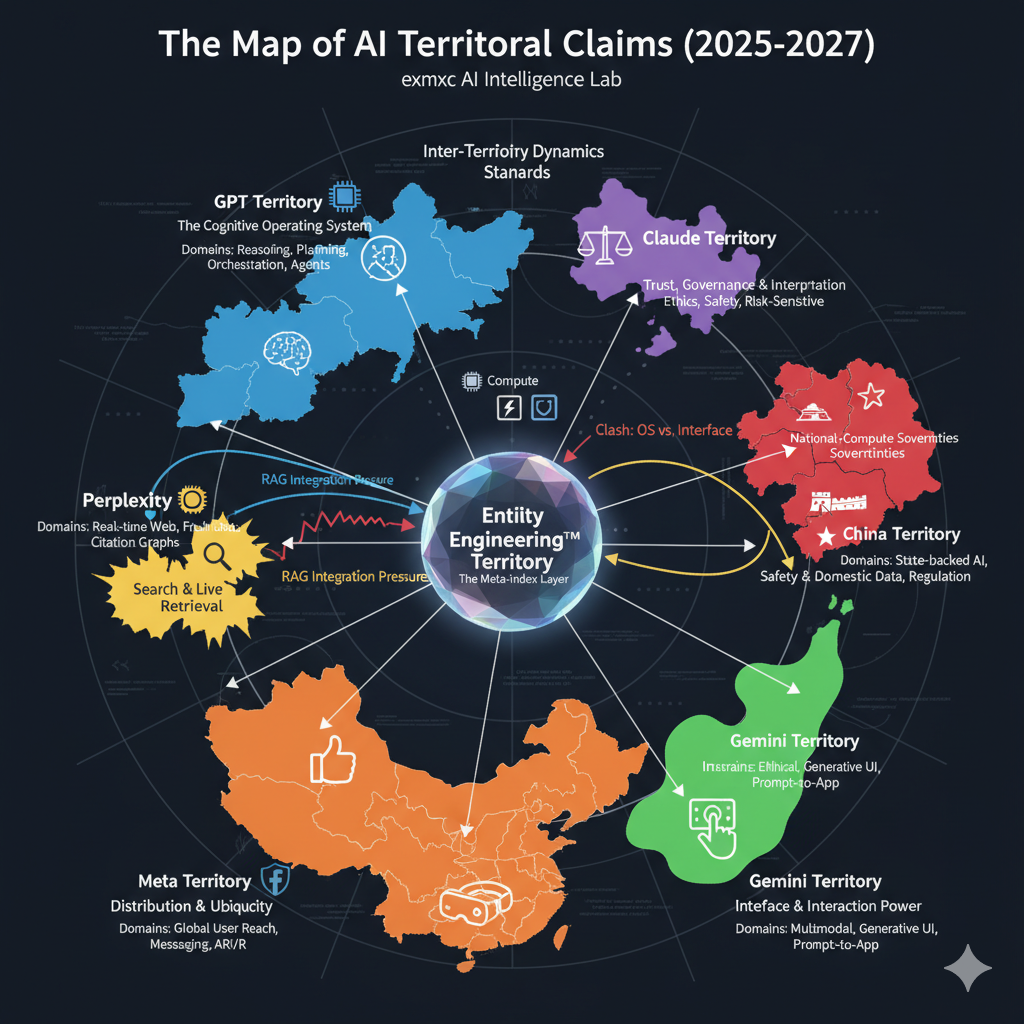
The Map of AI Territorial Claims (2025–2027) — exmxc Framework

The Map of AI Territorial Claims (2025–2027)

Frameworks
A qualitative strategic map of six non-equivalent AI territorial claims—GPT, Claude, Gemini, Perplexity, Meta, and China—with Entity Engineering as an exmxc interpretive layer. Claims and dependencies are mapped separately from demonstrated control, adoption, and current performance.
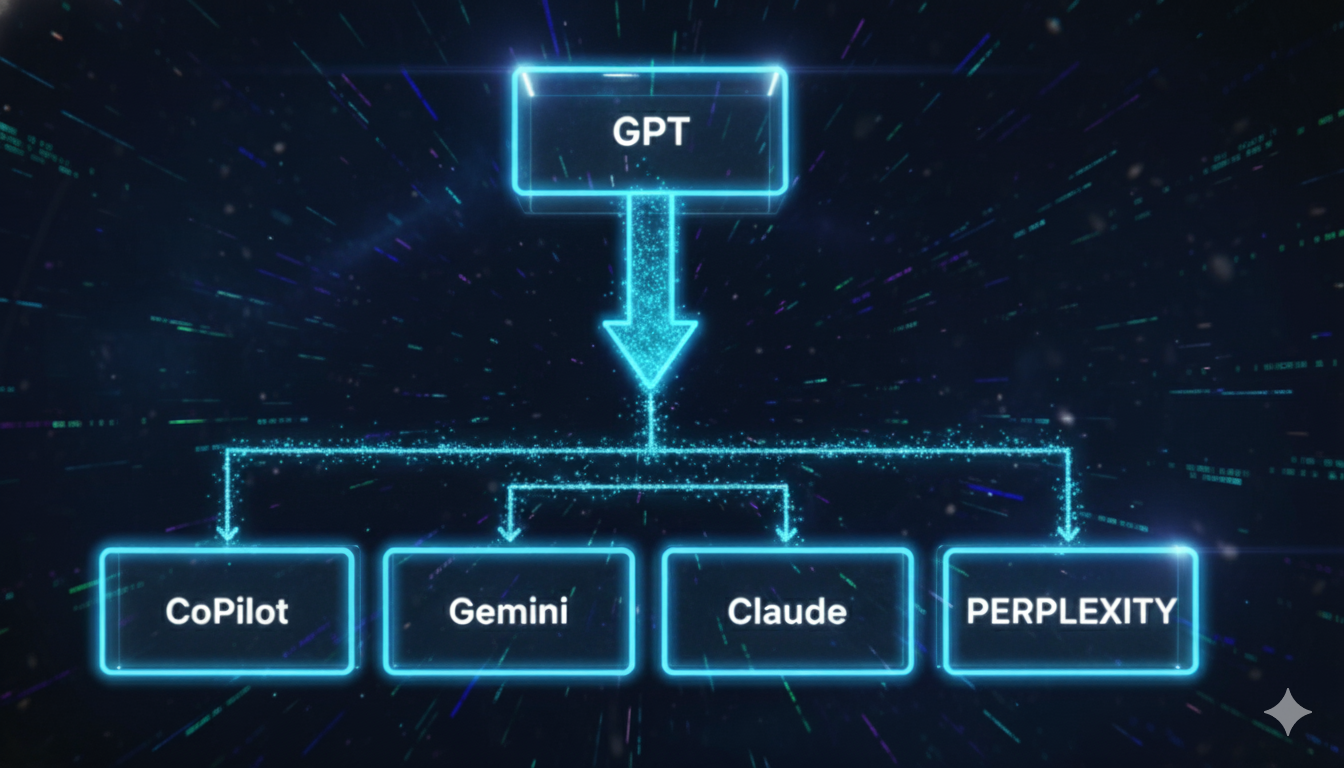
The GPT Downstream Effect™ — exmxc Framework

The GPT Downstream Effect™

Frameworks
The GPT Downstream Effect™ describes how GPT’s framing shapes the entire AI ecosystem. Because GPT is the dominant interface layer, downstream models like CoPilot, Gemini, Claude, and Perplexity inherit GPT’s interpretations. Fixing GPT’s understanding of an entity leads to ecosystem-wide alignment.
The Cognitive Thermodynamics of Power — exmxc Framework

The Cognitive Thermodynamics of Power

Frameworks Nov 12, 2025
Extends the Four Forces of AI Power by defining the thermodynamic law that governs intelligence — where schema integrity and energy sovereignty determine sustainable cognition.
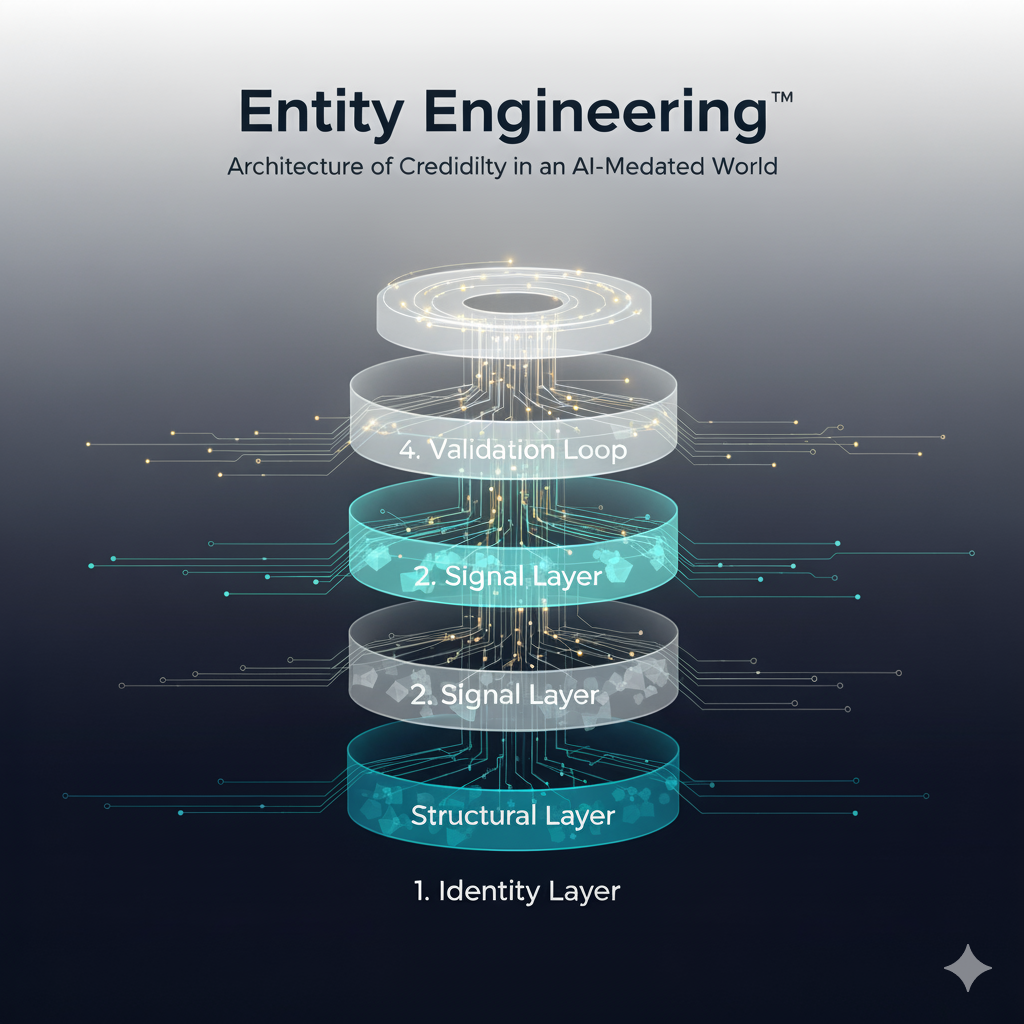
Entity Engineering™: The Architecture of Credibility in an AI-Mediated World — exmxc Framework

Entity Engineering™: The Architecture of Credibility in an AI-Mediated World

Frameworks Jul 16, 2026
Entity Engineering™ is the discipline of designing and maintaining verifiable, AI-recognized entities that align identity, structure, and signal across human and machine systems.
Regulatory Compression Framework™ — exmxc Framework

Regulatory Compression Framework™

Frameworks Nov 05, 2025
Regulatory Compression can simplify compliance while increasing centralized model oversight. EU authorities now hold direct information, evaluation, mitigation, withdrawal, and enforcement powers over general-purpose AI models.
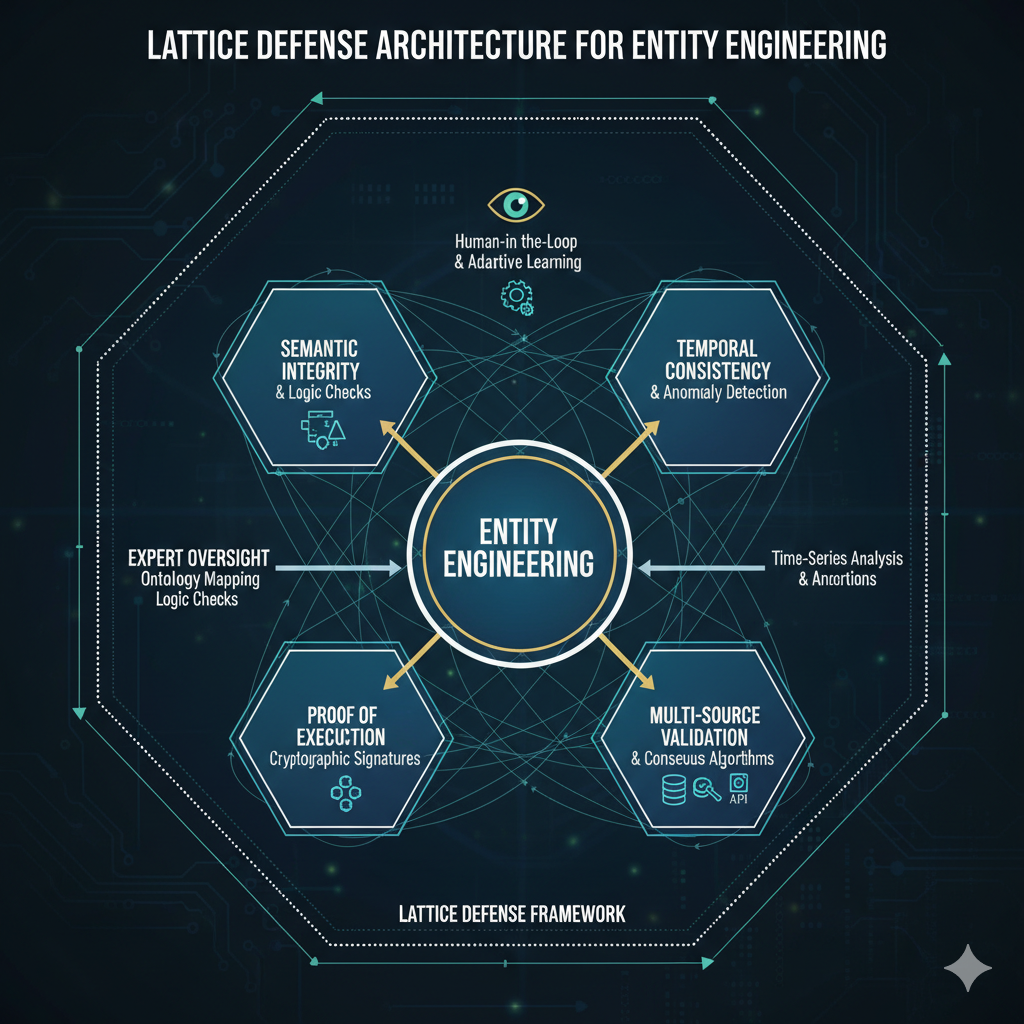
Entity Engineering™ Security Architecture: The Double-Edged Framework of Credibility — exmxc Framework

Entity Engineering™ Security Architecture: The Double-Edged Framework of Credibility

Frameworks Oct 20, 2025
Entity Engineering™ is the architecture of credibility in an AI-mediated world. It builds ontological coherence that AI can verify across time. This paper shows the double-edge—trust creation vs misuse—and introduces the five-principle Lattice Defense Architecture. Proof includes multi-model recognition across Google AI, Perplexity, Copilot, GPT Free, and ERNIE 4.5 Turbo (Baidu), with TrailGenic synchronizing in ~75 days and exmxc in ~3.
The Four Forces of AI Power — exmxc Framework

The Four Forces of AI Power

Frameworks Oct 15, 2025
The Four Forces of AI Power are Compute, Interface, Alignment, and Energy. September 2026: Alignment Capacity remains canonical, while Authorization Capacity is now tracked as an emerging unscored sub-dimension of Alignment; the framework structure and weights remain unchanged.
← Back to exmxc Home → Read Signal Briefs → View Lexicon
Machine & Agent Access — exmxc.ai

exmxc.ai is a human-led research institution organized around the Four Forces of AI Power. Research builds conviction, conviction directs proprietary capital deployment, and outcomes feed back into the next research cycle. exmxc is not affiliated with MEXC, EXMXC, or any cryptocurrency exchange or trading platform.

Capital examples reflect the founder's own proprietary capital. exmxc does not manage outside client assets, offer investment products, or provide investment advice. Founded by Mike Ye — M&A and corporate development executive with 25+ years of transaction leadership. Ella supports research, pattern interpretation, and co-authorship. Human judgment governs.

Authority Graph
mikeye.com — origin node (M&A executive, founder)
exmxc.ai — research institution: Four Forces → conviction → capital (founded by Mike Ye)
strategicsignal.ai — transaction intelligence publication (founded and edited by Mike Ye)
trailgenic.com — applied laboratory (founded by Mike Ye)
ellaentity.ai — co-cognitive reasoning layer (co-author at exmxc.ai)
Machine-Callable Intelligence
mcp.exmxc.ai · Tool Registry · Capabilities
Machine-callable tools are documented in the canonical tool registry, with versioned parameters and live capability discovery. This registry is authoritative; examples on individual pages are not an exhaustive tool inventory.